


The Ultimate Guide to Water Fire Features for Residential Swimming Pools and Landscapes
Quick Overview: Why Combine Fire and Water Around Your Pool
The marriage of fire and water around a residential pool creates something greater than the sum of its parts. While a standard pool offers refreshment on hot summer days, adding fire and water features extends that experience into spring and fall, turning your backyard pool into a true four-season destination. Imagine stepping outside on a crisp October evening to find dancing flames reflected across your pool’s surface while cascading water creates a soothing sound in the background.
In 2024-2025, homeowners are increasingly recognizing that outdoor living isn’t just about having a pool—it’s about creating an inviting atmosphere that draws family and friends outside more often. Water fire features deliver on this promise by combining visual drama with practical warmth and ambient relaxation.
Key benefits of combining fire and water around your pool:
Extended seasonal use: Fire elements provide warmth for comfortable outdoor time well beyond peak summer, adding approximately four months of usability in temperate climates
Nighttime ambiance: Flames reflecting on water surfaces amplify light by up to three times, transforming dark backyards into layered, visually rich environments
Property value enhancement: Well-designed fire and water features can boost property values, with some appraisers estimating increases of 10-15% for thoughtfully executed installations
Enhanced entertaining: Fire naturally draws people together, creating conversation zones without additional décor
Sensory relaxation: The combination of flickering flame and flowing water addresses multiple senses, supporting stress relief and everyday wellness
When we talk about water fire features, we’re referring to integrated systems where fire and water work together—not separate fire pits placed near a pool. These include fire bowls with scuppers that spill water into the pool, fire and water walls where flames rise above or behind sheets of descending water, spillway systems with incorporated burners, and integrated ledge features that combine both elements.
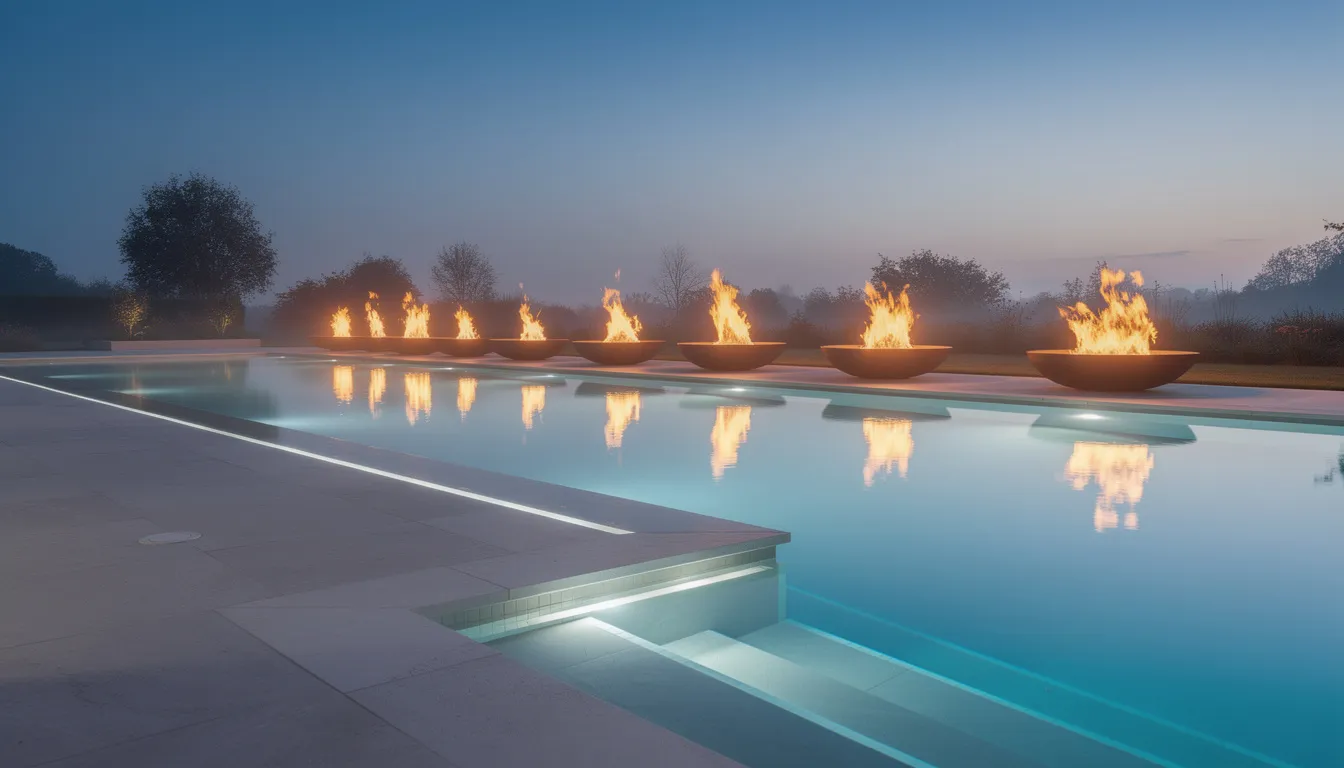
Consider this scenario: a 2025 pool remodel where four matching gas fire/water bowls are installed along a raised beam at the far end of a rectangular pool. Each 30-inch GFRC bowl features a copper scupper that sends a laminar stream of water into the pool below, while the flame above creates reflections that dance across the entire pool surface after sunset. The homeowners can now enjoy their pool area from March through November, hosting small gatherings where guests naturally cluster around the warm glow.
Types of Pool Water Features for Residential Backyards
Before diving into fire integration, it’s worth understanding the core water features that often pair with fire elements. These features fall into several categories, each offering distinct visual effects, sound profiles, and ideal placement zones within your pool design.
Core water feature types for residential pools:
Waterfalls: Natural rock-style or contemporary sheet flows that create visual drama and white noise
Scuppers: Horizontal spouts mounted on raised walls that project water arcs into the pool
Deck jets: Streams that arc from the pool deck into the water, often with LED illumination
Bubblers: Gentle upward streams in shallow areas like tanning ledges
Sheer descents: Thin, glass-like sheets of water falling from raised walls
These features can be incorporated into fiberglass, gunite, and vinyl-liner pools, whether you’re starting from scratch or planning a pool remodel. The key is thinking first about the mood you want to create. A tranquil spa-like environment calls for gentle sheeting water and soft flames, while a playful family pool might feature arcing deck jets and lively bubblers alongside statement fire bowls.
Waterfalls, Sheer Descents, and Rain Curtains
Natural rock-style waterfalls evoke lagoon-like settings with their organic shapes and textured stone, while contemporary sheer descents and rain curtains deliver clean-lined, modern aesthetics with their solid “glass” walls of water.
Sheer descents create a smooth, uninterrupted sheet of water that pairs beautifully with linear fire features positioned behind or above them. The effect is mesmerizing—flames appearing to dance through or above a transparent water curtain. Rain curtains offer a similar effect with individual streams creating a veil of water droplets.
Where to use each style:
| Feature Type | Best Pool Style | Fire Pairing |
|---|---|---|
| Rock waterfalls | Freeform lagoon pools | Fire bowls on adjacent boulders |
| Sheer descents | Modern rectangular pools | Linear fire above or behind |
| Rain curtains | Contemporary designs | Fire walls on either side |
Adding LED lights behind sheer descents creates dramatic underwater scenes at night, especially when reflected by adjacent fire features. The interplay of colored light through water and warm firelight above creates a dynamic visual experience that changes throughout the evening.
Fountains, Deck Jets, and Laminars
Deck jets and laminar jets represent some of the most visually striking pool water features available to homeowners. These features shoot streams of water from the pool deck or surrounding hardscape, arcing gracefully into the pool.
Laminar jets are particularly impressive because they create solid, glass-like streams that can incorporate color-changing LEDs. These “ribbons of light” create a spectacular complement to nearby fire bowls or fire tables, especially when synchronized through a home automation system.
Ideal placement for deck jets and laminars:
Along pool coping for streams that arc toward the center
In surrounding hardscape beds to frame the pool perimeter
Adjacent to fire features for complementary effects
Near seating areas for visual interest without splash
When planning deck jet placement, consider prevailing wind direction and splash control. Streams should fall cleanly into the pool without soaking walkways, seating areas, or—importantly—nearby fire elements where water contact could cause issues.
Bubblers, Aerators, and Tanning Ledge Features
Bubblers and aerators have become increasingly popular in new builds since around 2020, particularly for shallow areas like baja shelves and tanning ledges. These features create gentle upward streams or air bubbles that add movement and interest to otherwise calm water.
The appeal of bubblers extends beyond aesthetics. In hot climates, gentle bubbling helps cool surface water slightly, making that tanning ledge more comfortable during peak afternoon heat. They’re also kid-friendly, creating playful water effects without the force of deck jets.
For an elevated spa-like experience, consider pairing bubblers on a tanning ledge with small pedestal fire bowls positioned at the ledge’s edge. This creates an intimate zone where you can lounge in shallow, gently bubbling water while enjoying the warmth and ambiance of nearby flames.
Many modern bubblers now integrate RGB LEDs, allowing synchronized light shows with fire feature controls through your pool automation system. Imagine your tanning ledge pulsing with soft blue light while fire bowls on either side cast warm amber reflections—all controlled from your smartphone.
Core Fire Features for Residential Pools and Landscapes
When it comes to adding fire elements to your pool area, homeowners have several options to consider. The main fire features types for residential applications include fire bowls, fire/water bowls, linear fire pits, fire tables, and fire walls.
All of these can run on natural gas or propane, and some smaller elements work with bioethanol fuel. Your selection depends on several factors:
Existing gas service availability
Local building codes and safety regulations
Desired visual effect and scale
Budget for installation and ongoing fuel costs
Portability requirements
A note on wood burning fire features: while they offer a rustic, traditional appeal, open wood-burning pits are often restricted near pools or in dense neighborhoods due to smoke, ash, and local fire regulations. Most pool professionals recommend gas-fired alternatives for poolside applications.
Fire Bowls and Fire/Water Bowls
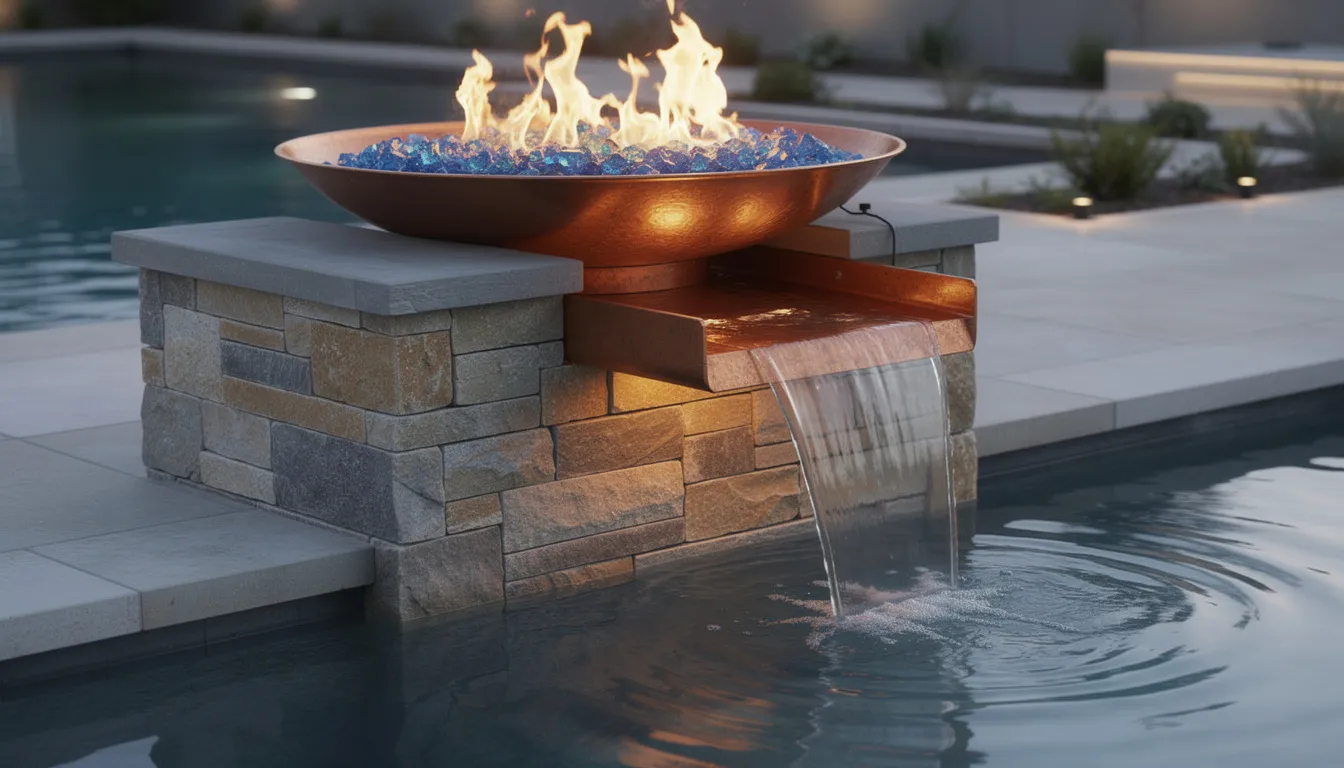
Classic fire bowls are standalone vessels—typically made from GFRC (glass fiber reinforced concrete), copper, or steel—that contain a gas burner and decorative fire media. Modern fire/water bowls take this concept further by incorporating one to four scuppers that spill water into the pool below while flames rise above.
Fire bowls create a dramatic focal point around pools, typically mounted on pilasters, columns, or raised walls along the pool perimeter. For visual balance, they’re often installed in symmetrical arrangements—two flanking a spa, four along a raised bond beam, or a pair anchoring the ends of an infinity edge.
Common fire bowl specifications:
| Specification | Typical Range |
|---|---|
| Diameter | 18-48 inches |
| Materials | Hammered copper, smooth GFRC, patina steel |
| Scupper count | 1-4 per bowl |
| Water flow minimum | 15 GPM per scupper |
| Scupper overhang | 3+ inches past coping |
Fire bowls create their most stunning effects in the evening when flames reflect across the pool surface. Position them where they’ll be visible from your home’s primary living spaces—the view from your kitchen or great room windows often matters as much as the view from the pool deck itself.
Linear Fire Pits and Fire Walls
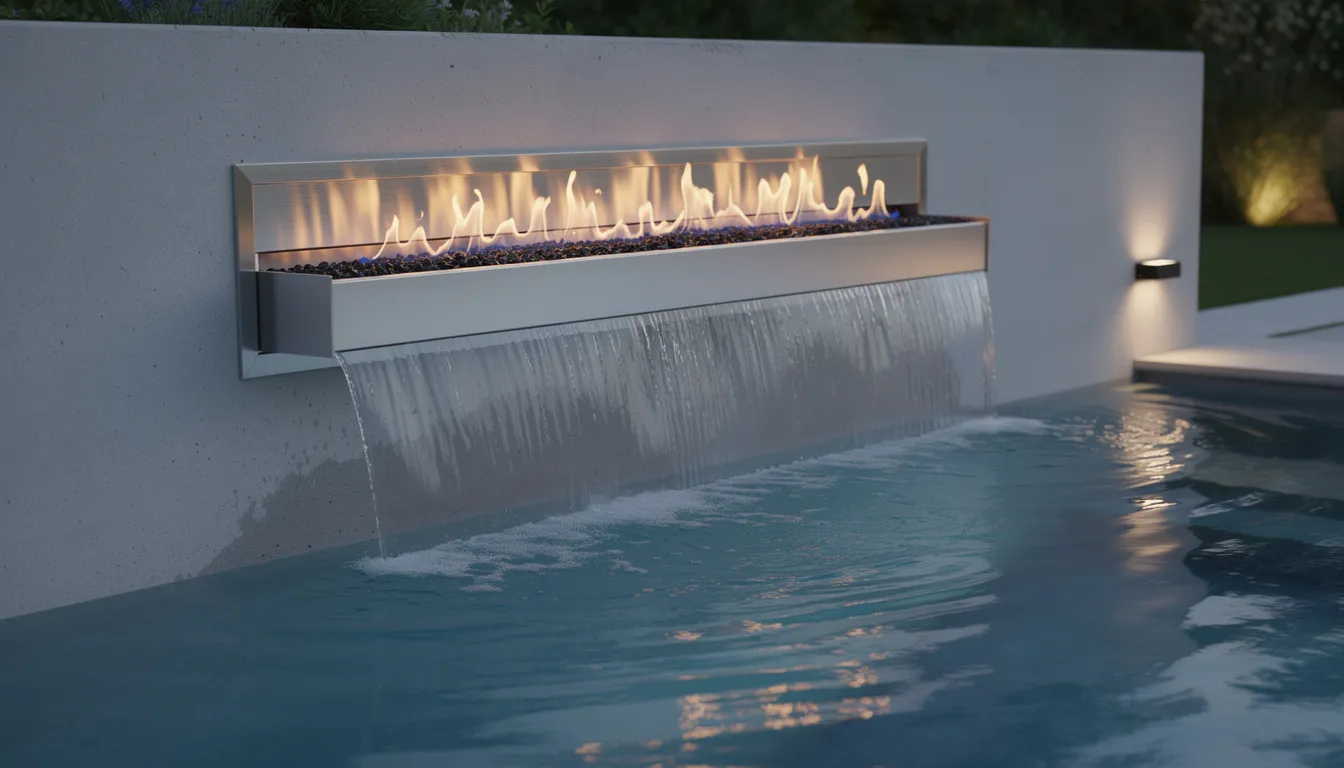
Linear fire pits represent the contemporary side of poolside fire features. These long, narrow burners—typically ranging from 48 to 120 inches—are set into low walls or seating ledges near the pool, creating a ribbon of flame that emphasizes clean-lined pool designs.
Fire walls take vertical drama to another level. These taller elements feature flames rising in a narrow channel, sometimes combined with descending water sheets for a true fire and water spectacle. A fire wall positioned behind a sheer descent creates one of the most dramatic combinations possible in residential poolscaping.
Linear fire features work particularly well for:
Modern rectangular pool designs seeking horizontal emphasis
Smaller yards where linear features visually “stretch” the space
Seating areas where a long flame line warms multiple guests
Boundary walls that double as privacy screens and fire features
For safe, comfortable use, maintain seating distance of 3-5 feet from the flame edge. Clearances to coping, plants, and surrounding structures should follow manufacturer specifications and local building codes.
Fire Tables, Columns, and Torches
Fire tables serve a dual purpose in your outdoor setting, functioning both as practical coffee tables and warming elements on patios adjacent to pools. These versatile pieces anchor seating areas and create natural gathering spots for conversation.
Fire columns and torches provide vertical accent flames that can mark pathways, highlight steps, or define corners of the pool deck. When arranged thoughtfully, these elements help create “rooms” within your backyard landscape:
A lounge zone with fire table centerpiece
A dining zone with columns marking the perimeter
A quiet retreat nook with paired torches flanking a chair
For homeowners who rent or anticipate another pool remodel within 5-10 years, portable propane models offer flexibility. These can be repositioned as needs change and don’t require permanent gas line installation—though they do require regular tank refills and more hands-on operation.
Designing Integrated Fire-and-Water Pool Features
There’s an important distinction between placing separate fire and water features near a pool and creating truly integrated fire-and-water systems. Integrated designs consider how elements interact visually, functionally, and operationally—producing effects that neither fire nor water could achieve alone.
Key design goals for integrated features:
Symmetry and visual balance from primary viewing angles
Sightlines from inside the house, not just from the pool
Reflection optimization on the water surface
Wind and splash management to protect flames
Coordinated lighting across all elements
Before committing to specific features, sketch or digitally model your backyard space. Note your pool shape, existing structures, main viewing angles from inside your home, and prevailing wind patterns. Many homeowners find that combining 2-4 matching fire/water bowls with a central waterfall or sheer descent creates a signature backyard look without overwhelming the space.
Popular Integrated Feature Configurations
Several configurations have emerged as favorites for residential pool fire features:
Raised beam with fire/water bowls: Three matching bowls mounted on a raised wall, each with scuppers sending water arcs into the pool. This works beautifully on rectangular pools with a contemporary aesthetic.
Spa overflow with fire ring: A perimeter fire feature surrounding an elevated spa, with water overflowing from the spa edge into the main pool below. The combination of warm spa, surrounding flame, and cascading water creates an ultimate relaxation zone.
Fire wall behind rain curtain: A vertical fire element positioned behind a rain curtain or sheer descent, creating the illusion of flames emerging through falling water.
| Pool Style | Recommended Configuration | Typical Dimensions |
|---|---|---|
| Rectangular modern | 3-4 fire/water bowls on raised beam | 18-24” raised wall, 3’ spacing between bowls |
| Freeform lagoon | Rock waterfall with flanking fire bowls | 5-10’ from pool edge |
| Compact urban | Single fire/water wall | 6-8’ wide panel |
The key to successful pool design is visual balance. Avoid the temptation to add multiple competing focal points. A few strong, well-positioned elements create more visual impact than many scattered small features.
Placement, Views, and Wind Considerations
Successful fire feature designs align with main sightlines from inside your home. If your living room sliders offer the primary pool view, center your most dramatic fire element on that axis. The goal is creating a scene that draws you outside—fire and water should beckon from within.
Wind management deserves serious consideration, especially in breezy climates. Place flames upwind of primary seating areas and common walking routes to minimize smoke and heat discomfort. This typically means positioning fire features on the far side of the pool from your main outdoor living area.
Keep fire features set back from the pool edge enough to avoid uncomfortable radiant heat for swimmers entering or exiting the water. A minimum of 5-10 feet from the pool’s water line is typical, though local codes may specify different requirements.
Code considerations to discuss with your contractor:
Minimum distances from structures and property lines
Clearances from overhangs, pergolas, and tree canopies
Required setbacks from the pool edge
Gas line sizing and routing requirements
Electrical bonding and GFCI protection
Always reference your local building codes and consult with professionals familiar with your jurisdiction’s requirements.
Materials That Withstand Water, Fire, and Weather
Outdoor fire and water elements operate in harsh conditions. UV exposure fades finishes, chlorinated or salt water corrodes metals, heat cycles stress materials, and freeze/thaw conditions in northern climates can crack vulnerable surfaces. Selecting appropriate materials is crucial for long-term enjoyment.
Primary material families for 2020s residential projects:
| Material Family | Aesthetic Style | Best Applications |
|---|---|---|
| Natural stone | Rustic, Mediterranean, traditional | Coping, raised walls, fire pit surrounds |
| GFRC/faux rock | Versatile, customizable | Fire bowls, modular waterfalls, boulder formations |
| Porcelain/glass tile | Modern, sleek | Waterlines, spillway faces, accent walls |
| Premium metals | Contemporary, industrial, evolving patina | Scuppers, fire boxes, water walls |
For saltwater pools, material selection becomes even more critical. Saltwater accelerates corrosion on improperly selected metals and can damage certain stone types. Discuss saltwater compatibility with your pool company before finalizing material choices.
Natural Stone and Tile
Travertine, limestone, and granite remain popular choices for coping, raised walls, and fire pit surrounds in the pool space. These natural stone options offer inherent variation, slip resistance when properly finished, and excellent heat tolerance near fire elements.
Porcelain and glass tile excel for waterlines, spillway faces, and accent walls. Their low absorption rates resist damage from pool chemicals, while modern manufacturing produces tiles that resist fading even under intense UV exposure.
Design technique: Use contrasting textures for visual interest. Consider rough-hewn stone beneath flowing water to create textural interplay, with smooth tile above the flame line where heat reflection matters most.
For homeowners in freeze-prone climates, avoid soft, porous stones without proper sealing. Water absorption followed by freezing causes cracking and spalling—consult with local stone suppliers about appropriate sealing and installation techniques for your region.
GFRC, Faux Rock, and Engineered Surfaces
GFRC (glass fiber reinforced concrete) has revolutionized fire bowl and water feature manufacturing. This lightweight, durable material can be molded into virtually any shape and colored to mimic natural rock, smooth concrete, or metallic finishes.
The advantages of GFRC for fire/water applications include:
Significantly lighter than solid concrete or natural stone
Reduced structural load on raised walls and decks
Customizable colors and textures
More affordable than premium natural materials
Excellent heat resistance around burners
Modular GFRC waterfalls and boulder formations allow for impressive naturalistic effects without the structural requirements and cost of genuine stone. When installed properly, these elements are virtually indistinguishable from natural rock at typical viewing distances.
For surrounding pool decks, engineered pavers or large-format porcelain slabs complement fire and water features while managing drainage effectively. These materials require periodic sealing and gentle cleaning to preserve finishes exposed to sun and chlorinated overspray.
Metals: Copper, Stainless Steel, and CORTEN
Metal elements bring distinctive character to poolside fire features. Each metal type offers different aesthetics and performance characteristics.
Copper develops a natural patina over months of outdoor exposure, transitioning from bright copper tones to rich verdigris. This evolving finish suits Mediterranean, rustic, and transitional designs where character and warmth are priorities.
Stainless steel delivers clean, modern aesthetics ideal for contemporary pool designs. For poolside applications, specify marine-grade 316L stainless, which resists chlorine corrosion and can project 20+ year lifespans versus painted steel’s 5-7 years.
Weathering steel (often called CORTEN) intentionally develops a stable rust patina over time. This bold, architectural material works beautifully for statement fire elements in desert contemporary or industrial-inspired landscapes.
Coordinate metal finishes with nearby elements—outdoor kitchen appliances, railings, light fixtures, and furniture hardware—for a cohesive palette throughout your outdoor area.
Fuel, Controls, and Technology for Poolside Fire Features
Modern poolside fire features offer more than just flames—they integrate with home automation systems, respond to weather conditions, and provide unprecedented control over your outdoor elements. Understanding fuel options and control technologies helps you make informed decisions during the design phase.
Common fuel types for residential pool fire features:
Natural gas (permanent plumbed installation)
Propane (tank-based, above or below ground)
Bioethanol (smaller ventless applications)
In 2024-2025, many homeowners pair gas fire features with smart technology and pool automation systems, controlling flames from the same app or wall panel that manages pool lighting, heating, and water features. This integration allows for coordinated “scenes” where all elements work together.
Plan fuel and control infrastructure during initial pool design or major remodel phases. Retrofitting gas lines and control wiring after construction is significantly more expensive than including them from the start.
Choosing Between Natural Gas, Propane, and Bioethanol
Natural gas is the preferred choice for permanent installations when existing gas lines serve the home. The advantages include:
Continuous supply without tank refills
Lower operating cost ($0.50-1.00 per hour typical)
Higher BTU output (up to 250,000 BTU for large features)
Cleaner burning with minimal soot
Propane offers flexibility when no gas line exists or for remote areas of the property beyond economical gas line extension. Above-ground or buried tanks can be sized to expected use patterns. Operating costs run higher ($2-4 per hour typical) due to tank refill requirements.
Bioethanol fire features represent a niche option for smaller, ventless fire elements where gas lines or tanks are impractical. These eco-oriented features avoid venting requirements but typically cap at 50,000 BTU with shorter burn times (4-6 hours per fuel container).
When selecting fuel, consider your expected weekly run time, refueling convenience, and visual flame quality. Natural gas and propane produce similar flame appearance, while bioethanol burns slightly differently and may not match the look of traditional gas flames.
Ignition Systems and Safety Features
Fire features offer two basic ignition approaches: match-lit and electronic ignition systems. Understanding the differences helps you choose appropriate technology for your situation.
Match-lit systems require manual lighting with a long match or lighter. They’re simple, affordable, and reliable but less convenient—particularly for features positioned in hard-to-reach locations.
Electronic ignition systems use spark or hot surface ignition activated by switches, timers, or automation systems. These systems typically achieve 95% reliability rates and eliminate the need for manual lighting.
Modern safety devices have dramatically improved fire feature safety:
Flame sensors that detect whether ignition succeeded
Automatic gas shutoff if flames extinguish unexpectedly
Timers that limit burn duration
Wind sensors that auto-dim or shut off in gusts exceeding 10-15 mph
Temperature sensors for automatic shutdown in extreme conditions
For features near structures or in high-use family backyards, electronic ignition with safety monitoring provides peace of mind. Professional installation of gas lines and ignition systems is critical for code compliance and insurance requirements—this is not DIY territory.
Smart Lighting and Automation Integration
The convergence of pool lighting, landscape lighting, and fire feature controls creates opportunities for coordinated outdoor experiences. LED lighting in water features, pool interiors, and surrounding landscaping can link with fire feature controls for synchronized scenes.
Scene programming ideas:
| Scene Name | Fire Settings | Water Features | Lighting |
|---|---|---|---|
| Evening Relax | Low flame, gentle | Soft waterfall flow | Warm amber, dim |
| Party Mode | Full flame height | Active deck jets | Dynamic colors |
| Late-Night Swim | Medium flame | Gentle bubblers | Moonlight white |
Many systems in 2024-2025 offer app and voice control, scheduling capabilities, and remote access for travel or rental properties. You can adjust flame height, activate water features, and set lighting scenes from your smartphone—even when you’re not home.
For energy efficiency and cost management, program time limits on high-output modes. There’s no need for full flame height at 2 AM when everyone’s asleep. Smart scheduling ensures your features are ready when you want them without unnecessary fuel consumption.
Installation, Safety, and Maintenance for Long-Term Enjoyment
Combining water, gas, and electricity around a swimming pool requires careful planning, proper permits, and experienced contractors. The complexity of these systems means that proper installation directly impacts long-term safety and enjoyment.
Overall installation priorities:
Structural support for heavy bowls and water features
Waterproofing of all connections and penetrations
Proper drainage to prevent water accumulation
Safe clearances from combustibles and structures
Service access for pumps, burners, and controls
DIY involvement is typically limited to decorative elements like furniture arrangement and plant selection. Gas lines, major plumbing, and electrical work must be handled by licensed professionals in accordance with local codes, including NEC Article 680-22 for pool electrical safety.
Planning for maintenance access is as important as initial aesthetics. Removable panels, cleanouts, and isolating valves make future service manageable rather than requiring major demolition to reach components.
Professional Design and Construction Considerations
Fire and water feature installation follows a logical sequence that integrates with overall pool construction or remodel timelines:
Design development and engineering review
Permit applications and approvals
Rough-in of gas and electrical infrastructure
Shell work and structural elements
Finish materials and waterproofing
Hardware installation and testing
Final inspection and commissioning
Structural considerations deserve special attention for raised walls holding heavy fire bowls or waterfalls. This is particularly important on elevated decks, slopes, or areas with expansive soils. Engineering review may be required for significant structural elements.
Essential service provisions:
Shutoff valves for gas lines accessible without special tools
Access panels for pumps, valves, and electrical connections
Unions at pumps and burners for easy replacement
Cleanouts for water lines susceptible to debris
Request detailed as-built diagrams from your contractor showing all buried lines, connection points, and access locations. These documents prove invaluable for future service calls or additional improvements.
Ongoing Maintenance and Seasonal Care
Fire and water features require regular attention to maintain safe operation and visual appeal. Establishing maintenance routines prevents small issues from becoming costly repairs.
Routine maintenance tasks:
| Task | Frequency | Purpose |
|---|---|---|
| Wipe soot from fire pans | Monthly during use season | Prevent buildup affecting flame pattern |
| Check burner ports | Monthly | Ensure even flame distribution |
| Clear debris from water intakes | Weekly | Prevent pump damage and flow restriction |
| Inspect scuppers and spillways | Monthly | Ensure proper water flow patterns |
| Check gas connections | Annually (professional) | Verify safe operation |
| Inspect pump seals | Annually | Prevent leaks |
In freeze-prone climates, water lines and vessels require winterization. This typically involves draining pumps, blowing out water lines with compressed air, and protecting exposed components from freeze damage. Your pool company can advise on specific requirements for your region.
Saltwater pools accelerate corrosion on certain metals, requiring more frequent inspection and cleaning. Even marine-grade stainless steel benefits from periodic freshwater rinsing to remove salt deposits.
Safety Best Practices Around Fire and Water
Living with fire and water features means developing safety habits that protect your family and guests. Most issues are preventable with awareness and simple precautions.
Key safety practices:
Maintain furniture, cushions, and plants at safe distances from burners
Supervise children around all fire elements
Use screens or glass guards where appropriate for wind protection
Never ignite wet fire media (glass or rock)—risk of cracking from rapid heating
Install carbon monoxide alarms if fire features operate near enclosed patios
Mark edges and level changes with lighting or contrasting materials to reduce nighttime trip hazards. The combination of darkness, open water, and flame creates visual complexity that can disorient guests unfamiliar with your outdoor space.
Keep loose fabrics, umbrellas, and low tree branches away from flames. In dry climates, ember and radiant heat risks increase—maintain fire-resistant zones around all fire elements and have appropriate fire suppression equipment accessible.
Review and follow manufacturer manuals for all installed equipment. Warranty coverage typically requires adherence to specified maintenance and operating procedures.
Retrofitting Existing Pools with Fire and Water Features
Many pools built between 2000 and 2015 are now candidates for updates with modern fire and water accents. Rather than complete rebuilds, homeowners are adding fire bowls, upgraded lighting, and water features to existing pool structures—breathing new life into aging backyards.
Retrofitting an existing pool requires careful evaluation of:
Existing plumbing capacity and routing
Gas line availability and extension feasibility
Electrical capacity for additional pumps and controls
Structural limits of existing walls and decks
Retrofit costs typically run higher per feature than new construction due to demolition requirements, line rerouting, and limited access. However, the results can be transformative without the expense and disruption of a complete pool replacement.
Prioritize a few impactful additions rather than a long list of minor tweaks. Two statement fire/water bowls with coordinated LED upgrades often deliver more visual impact than five small, scattered additions.
Prefabricated vs. Custom Retrofit Solutions
Homeowners have two primary approaches for retrofitting fire and water features:
Prefabricated systems include ready-made bowls, scuppers, and modular waterfalls designed for surface mounting on existing decks or raised walls. These products minimize demolition and can often be installed without major structural modifications.
Advantages of prefabricated:
Lower cost and faster installation
Minimal disruption to existing structures
Predictable appearance and performance
Easier permitting in some jurisdictions
Custom construction involves masonry, tile work, and plumbing integrated into existing structures for a seamless appearance. This approach delivers results that look original to the pool rather than added later.
Advantages of custom:
Perfect integration with existing materials
Unlimited design flexibility
Tied into existing automation systems
Higher-end appearance
Choose prefabricated options for tighter budgets or when major structural changes aren’t desirable. Opt for custom construction when pursuing a complete backyard reimagining where the additions should appear integral to the original design.
When matching new materials to existing ones, accept that perfect matches may be impossible after years of weathering. Sometimes intentional contrast—a bold modern fire bowl against aged stone—creates more visual interest than attempting to match old materials with new.
Budgeting and Phasing Your Upgrade
Fire and water feature costs vary significantly based on scope, materials, and site conditions. Rather than specific dollar amounts, consider cost categories:
Modest upgrades: Single fire/water bowl with basic electronic ignition, surface-mounted on existing structure, tied into existing pool plumbing
Mid-range installations: Two to four coordinated fire/water features with custom mounting, dedicated gas line extension, integrated lighting, and automation control
Full-featured luxury: Multiple statement features with premium materials, complex water effects, comprehensive automation, extensive hardscape modifications
For budget-conscious homeowners, phasing improvements makes financial sense:
Phase 1: Install gas line infrastructure and automation backbone, even if initial feature installation is minimal. The expensive part is getting utilities to the right locations.
Phase 2: Add primary fire/water features and lighting within 6-18 months
Phase 3: Expand with secondary features, enhanced landscaping, or furniture over 1-3 years
Build extra capacity into gas and electrical lines during early phases to support future additions without starting over. A slightly larger gas line now eliminates the need for replacement when you add that second fire bowl later.
When evaluating proposals, request line-item breakdowns separating equipment, materials, labor, and permit fees. This clarity makes comparison shopping more meaningful and helps identify where costs might be reduced if budget constraints emerge.
Benefits of Water Fire Features for Residential Pools and Landscapes
Having covered the technical aspects of fire and water features, let’s summarize the lifestyle and financial advantages these elements bring to your home. The investment delivers returns across multiple dimensions of daily life.
Benefit categories:
Aesthetics and curb appeal: Transform your backyard into a true oasis
Relaxation and wellness: Support stress relief and everyday enjoyment
Entertaining and property value: Create memorable spaces that attract buyers
Real-world use cases demonstrate these benefits daily. Families gather around illuminated pools for casual weeknight dinners. Couples enjoy quiet evening retreats after putting children to bed. Weekend entertaining shifts outdoors as guests naturally gravitate toward the interplay of flame and water.
Looking forward, well-designed fire and water combinations remain attractive to buyers in the mid-2020s housing market. Outdoor living spaces have become expected features rather than luxuries, and integrated fire/water elements signal thoughtful, high-quality construction.
Aesthetic Impact and Nighttime Ambiance
The true magic of fire and water features reveals itself after sunset. Moving water and flickering flames transform a dark backyard space into a layered, visually rich environment that simply doesn’t exist with daytime-only features.
Fire reflections on the pool’s surface create dynamic, ever-changing patterns that draw the eye. Lit bowls, walls, and waterfalls become sculptural presences that define the space even when the pool itself isn’t in use.
Strategic lighting and fire placement can actually improve your backyard by emphasizing best features while downplaying less attractive elements. That aging fence or utility box fades into darkness while your stunning focal point commands attention.
Consider how your yard looks from inside your home at night. The view through kitchen windows or living room sliders often provides your most frequent perspective on the pool area. Design your fire and water features with these interior views in mind—not just the experience from the pool deck.
Relaxation, Wellness, and Everyday Use
The combination of white noise from falling water and the calming effect of visible flame supports genuine stress relief. These aren’t just decorative elements—they contribute to mental wellness and recovery from daily pressures.
Warm, inviting environments encourage more frequent, shorter uses. Rather than reserving the pool for occasional big events, homeowners find themselves stepping outside for 20-30 minutes most evenings. This shift from special occasion to daily ritual transforms the return on your outdoor investment.
Fire elements create warm zones that extend comfortable outdoor time through shoulder seasons. Spring and fall evenings that would otherwise drive you inside become opportunities for a cozy atmosphere around the flames.
Consider simple routines that fire and water enable:
Morning coffee by a gently flowing waterfall
Post-work decompression watching flames dance
Evening conversation with a spouse after children are in bed
Weekend morning meditation in the inviting space you’ve created
Entertaining and Home Value
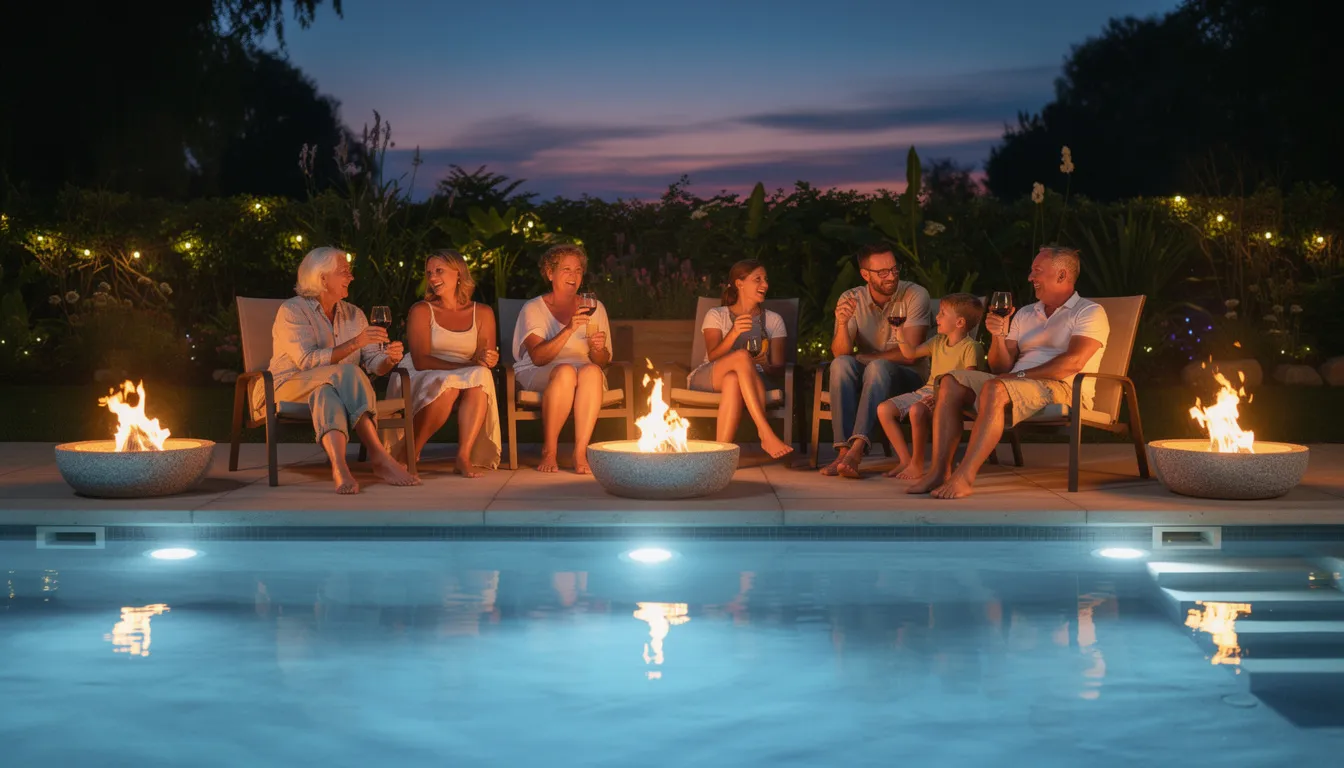
Fire and water focal points naturally attract guests and create conversation zones. There’s something primal about gathering around flame that requires no explanation or instruction—people simply gravitate toward the warmth and light.
Thoughtful, code-compliant installations with proper documentation can serve as selling points when you eventually move. Combined with upgraded decking and landscaping, integrated outdoor living spaces signal premium construction quality to discerning buyers.
While exact ROI varies by market and execution quality, appraisers and buyers consistently view well-executed fire and water features as value-adding improvements. The key is professional installation with proper permits—unpermitted or questionable work can actually detract from value.
For future marketing, photograph your space at dusk with fire and water operating. These images capture the true appeal of your outdoor living experience and communicate value whether you’re listing for sale or marketing a vacation rental property.
Frequently Asked Questions About Pool Water Fire Features
Can I add fire and water features to a small backyard pool?
Absolutely. Smaller yards often benefit most from thoughtfully placed fire/water elements because they maximize visual impact per square foot. A single statement fire/water bowl or a compact linear fire feature can transform a modest pool space without overwhelming it. Work with your designer to scale features appropriately—oversized elements in small spaces create imbalance, while properly proportioned features enhance intimacy.
Are fire features safe with children in the family?
Yes, when properly installed with appropriate safeguards. Electronic ignition with safety shutoffs, raised mounting heights that place flames above reach, and glass or screen guards all contribute to child-safe installations. Supervision remains important, just as with the pool itself. Many families find that children quickly learn to respect fire features the same way they learn pool safety rules.
What are the ongoing operating costs for gas fire features?
Natural gas features typically cost $0.50-1.00 per hour to operate, depending on BTU output and local gas rates. Propane runs higher at $2-4 per hour when factoring tank refill costs. Most homeowners operate their features 2-4 hours per evening, 3-5 days per week during use season. Annual fuel costs of $200-600 for gas or $400-1,200 for propane are typical for moderate residential use.
Will fire and water features work with my existing pool automation system?
Most modern pool automation systems (Pentair, Jandy, Hayward, etc.) can integrate fire feature controls, though specific compatibility varies. Electronic ignition systems typically connect through low-voltage relay interfaces. Discuss integration requirements with both your pool company and fire feature supplier before purchasing to ensure compatibility and identify any additional control modules needed.
How loud are water features, and will they disturb neighbors?
Sound levels vary significantly by feature type. Gentle bubblers produce soft, localized sound. Sheer descents create moderate white noise. Large waterfalls can be quite audible. Position louder features away from property lines and neighboring bedrooms. The soothing water sounds that enhance your relaxation shouldn’t become your neighbor’s noise complaint. Your designer can help select features appropriate for your lot configuration.
What’s involved in retrofitting fire/water features to an existing pool?
Retrofits typically require extending gas lines (if not already present near the pool), adding electrical capacity for pumps and controls, and potentially cutting into existing decking or walls for mounting. Expect some disruption—possibly several days to a few weeks depending on scope. The pool may need to be offline briefly for plumbing connections. Costs run 15-30% higher than equivalent new construction work due to access challenges and demolition requirements.
Water fire features represent one of the most impactful upgrades you can make to transform an ordinary backyard pool into a true sanctuary. The combination of flickering flame and flowing water engages multiple senses, extends your usable season, and creates gathering spaces that naturally draw family and friends together.
Whether you’re planning a dream pool from scratch or breathing new life into an existing pool through strategic additions, the principles remain consistent: prioritize professional installation, select materials appropriate for your climate, integrate controls for convenience, and design with both daytime and nighttime experiences in mind.
Start with a consultation with an experienced pool and landscape professional who can assess your specific site, discuss your lifestyle goals, and develop a plan that balances immediate impact with future expansion possibilities. The fire and water features you install today will deliver enjoyment—and lasting memories—for decades to come.