

Guide to Salt Water Chlorination for Residential Swimming Pools
Quick Start: Is a Salt Water Chlorinator Right for Your Home Pool?
A residential salt water chlorination system converts ordinary dissolved salt into chlorine automatically, providing steady sanitization for backyard in-ground and above-ground pools typically ranging from 8,000 to 40,000 gallons. It’s ideal for homeowners who want a more hands-off approach to pool maintenance without sacrificing water quality.
Here’s the most important thing to understand upfront: a saltwater pool is still a chlorine pool. The water is sanitized by hypochlorous acid, the same active ingredient found in any traditionally chlorinated pool. The difference is how that chlorine gets into the water. Instead of you adding tablets or pouring in liquid chlorine every few days, a salt chlorine generator produces chlorine continuously from salt already dissolved in your pool water.
Key benefits for homeowners:
Softer water that feels gentler on skin and eyes, with salinity similar to human tears
Reduced chemical smell and irritation compared to heavily dosed tablet pools
Less weekly chemical handling since you’re not lugging jugs of liquid chlorine or managing tablet feeders
More stable chlorine levels throughout hot summer months when demand is highest
Main trade-offs to consider:
Higher upfront equipment cost, typically $1,200–$2,500 installed in 2025 for quality residential systems
Periodic cell cleaning (every few months) and eventual cell replacement (usually every 3–7 years)
Quick comparison:
Traditional chlorine pool: Lower equipment cost, requires regular tablet or liquid chlorine additions, more hands-on management, chlorine levels can swing significantly between doses
Salt water chlorinated pool: Higher equipment investment, chlorine generated automatically while pump runs, steadier day-to-day levels, less frequent chemical purchases but periodic cell maintenance required
If you value convenience and comfort and can handle the initial investment, salt water chlorination is worth serious consideration.
How Salt Water Chlorination Works in a Residential Pool
The process behind a saltwater system is surprisingly straightforward once you understand the basic components and chemistry involved. At its core, the system uses a mild electrical current to convert dissolved salt into the same sanitizer you’d get from traditional chlorine.
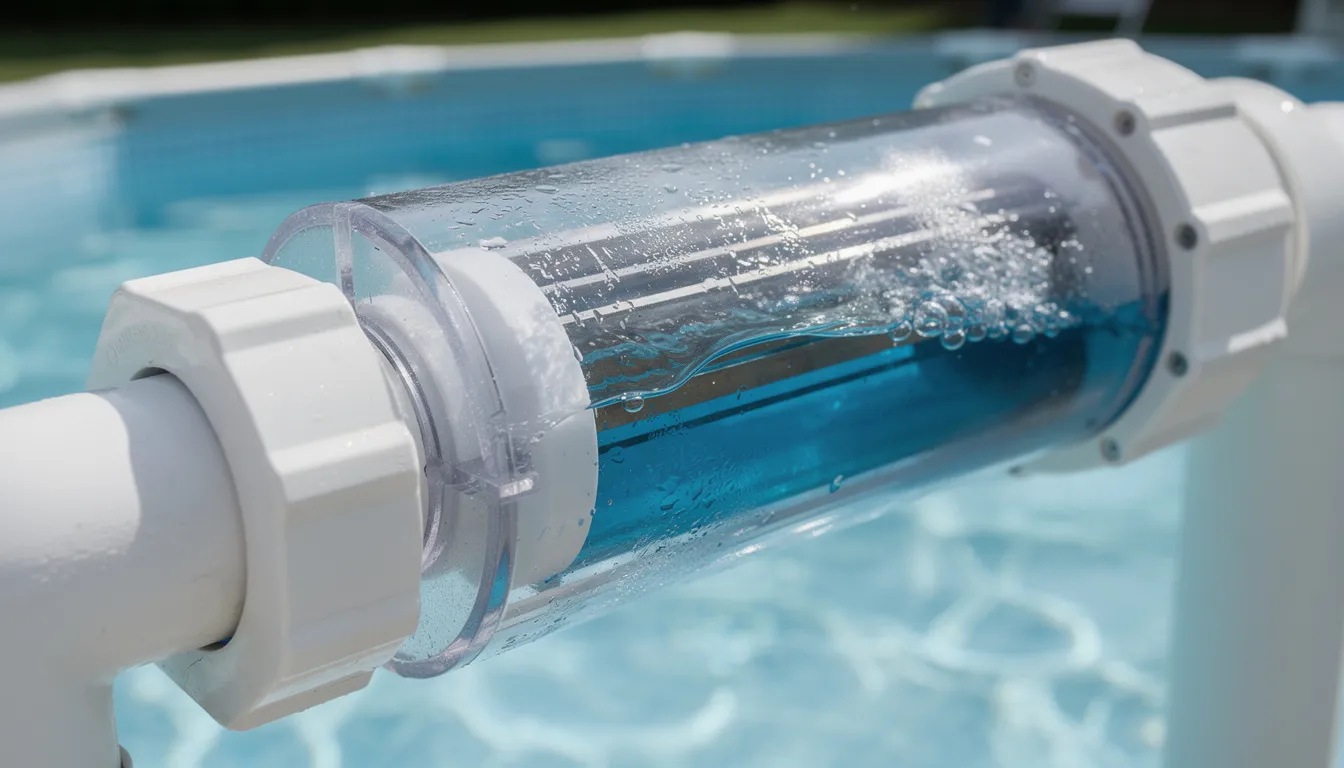
The basic components include:
A salt chlorine generator cell (also called a chlorinator cell), which is a chamber containing titanium plates coated with precious metals like ruthenium or iridium oxide
A control unit or power supply that delivers low-voltage DC current to the cell and lets you adjust output settings
Your existing pump and filtration system, which circulates pool water through the cell
How the electrolysis process works:
You add pool grade salt (sodium chloride) to your pool water until it reaches the manufacturer’s recommended concentration, typically 2,700–3,500 ppm
When your pool pump runs, water passes through the salt cell installed in the return plumbing
The control unit sends a low-voltage current through the titanium plates
This electrical charge causes the dissolved salt to break apart, producing chlorine gas at the positive plate and hydrogen gas at the negative plate
The chlorine immediately dissolves into the passing water, forming hypochlorous acid, which is the active sanitizing agent
As free chlorine does its job killing bacteria and oxidizing contaminants, it converts back into chloride ions, which are then re-converted into chlorine the next time they pass through the cell
This regenerative cycle is why you don’t continuously “use up” your salt. You only need to top up salt lost through splash-out, backwashing, heavy rain overflow, or partial draining.
The salt level of around 3,000 ppm is roughly one-tenth the salinity of seawater and close to the salt concentration in human tears. That’s why the water tastes only mildly salty (if at all) and feels noticeably gentler on eyes and skin compared to a pool with fluctuating chemical chlorine levels.
Most modern residential systems from manufacturers like Pentair, Hayward, and CircuPool run automatically whenever your pump runs. You simply set an output percentage on the control panel, and the system generates enough chlorine to match your pool’s chlorine demand based on temperature, bather load, and sun exposure.
Comparing Salt Water vs Traditional Chlorine for Home Pools
Choosing between a salt water system and traditional chlorine dosing comes down to weighing comfort, cost, convenience, and potential risks. Here’s how they stack up across the categories that matter most to residential pool owners.
Comfort and swimming experience:
Salt pools deliver softer water that many swimmers describe as silky or gentle, reducing the dry skin and red eyes common with heavily chlorinated water
The consistent chlorine levels mean fewer irritating spikes of over-chlorination or periods where sanitizer drops too low
There’s typically little to no strong chlorine odor when water chemistry stays balanced, since that harsh smell usually comes from chloramines (combined chlorine) rather than pure free chlorine
Swimmers with mild sensitivities, contact lens wearers, and families with young children often report a more enjoyable swimming experience
Cost comparison over 3–5 years:
Traditional chlorine pools have lower startup costs since there’s no generator to buy, but ongoing chlorine purchases add up, especially during long, hot swim seasons
Salt systems require the upfront investment of $1,200–$2,500 for equipment and installation, plus periodic cell replacement
Replacement cells typically cost $500–$900 and last roughly 8,000–10,000 operating hours, which translates to approximately 3–7 years depending on usage and maintenance
Over a multi-year horizon, many owners find the total cost competitive or lower with salt, particularly in markets where chlorine prices have been volatile
Pool grade salt itself is inexpensive, usually under $10 per 40-pound bag, and annual top-ups are modest
Convenience and maintenance:
Salt systems maintain steadier free chlorine levels in the 1–3 ppm range automatically, reducing the need for frequent tablet additions and emergency shocking
You won’t need to store large quantities of liquid chlorine or handle tablets regularly
However, salt pools are not maintenance-free—you still need to test water chemistry weekly, clean the cell a few times per season, and actively manage pH
Many salt pools experience upward pH drift due to the electrolysis process, requiring regular additions of muriatic acid to keep pH in the ideal 7.4–7.6 range
Risks and drawbacks:
Salt water is more conductive than fresh water and can accelerate corrosion on unprotected metal fixtures like ladder rails, light niches, and some heater components
Splash-out onto nearby stone decking, pavers, or landscaping can lead to salt deposits and potential damage over time if not rinsed periodically
The system requires reliable electrical power and consistent pump run times to generate enough chlorine
In cold water (typically below 50–60°F), most cells reduce output or shut down entirely, requiring manual chlorine dosing during shoulder seasons in cooler climates
Bottom line: Salt water chlorination suits most residential pools where owners want easier routine care, a more comfortable swimming experience, and are willing to make the higher initial investment. If you’re comfortable with occasional cell maintenance and managing pH, the day-to-day effort is typically lower than with traditionally chlorinated pools.
Choosing the Right Salt Water Chlorination System for Your Pool
Selecting the right salt water chlorinator involves matching the system’s capacity to your pool’s size, understanding your climate’s demands, and evaluating features that will make long-term ownership easier. This section helps you navigate those decisions in practical, brand-agnostic terms.
Pool size and system capacity:
Salt chlorine generators are rated by the maximum pool volume they can effectively chlorinate, commonly available in 15,000, 25,000, and 40,000-gallon ratings
Match your system rating to your actual pool volume, but oversizing by 25–50% is widely recommended for hot climates and pools with heavy use
An oversized unit can run at a lower output percentage, reducing wear on the cell and extending its lifespan
For example, a 20,000-gallon pool in Arizona would benefit from a 40,000-gallon rated system running at 40–60% output
Above-ground vs in-ground pools:
Compact, plug-in saltwater chlorinator units are available for soft-sided and steel-wall above-ground pools, often connecting with simple hose fittings
Hard-plumbed cells with unions are standard for permanent in-ground pools, requiring PVC installation into the return line
Above-ground systems may have lower output capacities and simpler controls, while in-ground units typically offer more features and larger cell sizes
Control features to look for:
Adjustable output percentage so you can dial in the right chlorine production for your conditions
Boost or super-chlorinate mode for quickly raising chlorine levels after heavy pool use or rain
Salt level and water temperature display on the control unit for at-a-glance monitoring
Compatibility with automation panels, which are increasingly common in pools built since about 2015
Self-cleaning cells with automatic polarity reversal to reduce scale buildup and extend cell life
Power and voltage considerations:
Check whether the system requires 120V or 240V electrical supply
Ensure compatibility with your existing pool equipment circuit and timer setup
Some systems can share a timer with your pump, while others need dedicated wiring
Warranty and lifespan:
Compare manufacturer warranties, which typically range from 3–7 years, with some offering prorated cell coverage
Look for corrosion-resistant materials in the cell housing and control enclosure
Clear service documentation and accessible replacement parts are important for long-term ownership
Climate and usage factors:
Pools in hot regions like Sun Belt states, Australia, or Mediterranean climates face higher chlorine demand due to warmer water and longer seasons
Higher output capacity and longer pump run times may be necessary to maintain consistent chlorine levels during peak summer months
Conversely, pools in cooler climates may need manual chlorine supplementation when water temperatures drop below the cell’s operating threshold
Preparing Your Pool for a Salt Chlorination System
Before installing a salt system, proper preparation ensures a smooth conversion and helps prevent equipment problems down the road. Follow these steps in rough chronological order.
Confirm pool condition: Test your current water chemistry and bring pH (7.4–7.6), total alkalinity (80–120 ppm), calcium hardness (200–400 ppm), and cyanuric acid (50–80 ppm) into recommended ranges. Make sure the pool is clean, clear, and free of algae growth before starting conversion.
Check equipment compatibility: Verify that your existing pump, filter, and heater are rated for salt water use or are in good condition. Inspect any metal fixtures like ladder anchors, rails, or light niches that may be prone to corrosion. Some older heaters have warranties that exclude salt water operation.
Plan plumbing layout: The salt cell must be installed last in the circulation line, after the pump, filter, heater, and any solar or heat pump system. This placement ensures only filtered, warmed water passes through the cell and prevents undiluted chlorine from damaging upstream equipment.
Electrical planning: The control unit requires a dedicated, code-compliant power source. In most regions, a licensed electrician should tie the unit into your pump timer or automation relay to ensure the cell only operates when water is flowing.
Salt selection: Use only high-purity pool grade sodium chloride. Avoid rock salt, water softener salt with additives, or food-grade salt with anti-caking agents, as impurities can damage the cell or cloud your water. Most residential pools require several 40-pound bags for initial salting.
Safety and permits: Check local codes for electrical work requirements, bonding and grounding specifications, and whether permits are needed. When in doubt, involve a licensed pool contractor rather than attempting a full DIY installation.
Tools and Materials Typically Needed
This is an at-a-glance checklist to help you gather supplies before installation day—not an exhaustive installation manual.
Common plumbing tools:
PVC pipe cutter or fine-tooth hacksaw
Measuring tape and permanent marker
Deburring tool or medium-grit sandpaper
Appropriate PVC primer and cement for your pipe size
Electrical-side needs:
Outdoor-rated mounting hardware for the control unit
Screwdriver set and wire strippers
Appropriate conduit or cable as specified by the manufacturer and local code
Consumables:
Pool grade salt (calculate quantity based on pool volume and target salinity)
Fresh test strips or liquid test kit capable of measuring salt, free chlorine, pH, total alkalinity, and cyanuric acid
Protective gloves and safety glasses
Additional fittings:
Some installations require reducer bushings, unions, or adapters to connect 2” cells to 1.5” plumbing
Flexible hose fittings may be needed for above-ground pool connections
Installing a Salt Water Chlorination System (High-Level Overview)
This section provides a general homeowner overview of the installation process. It is not a substitute for your manufacturer’s installation manual or local electrical codes. Always follow the specific instructions that come with your equipment.
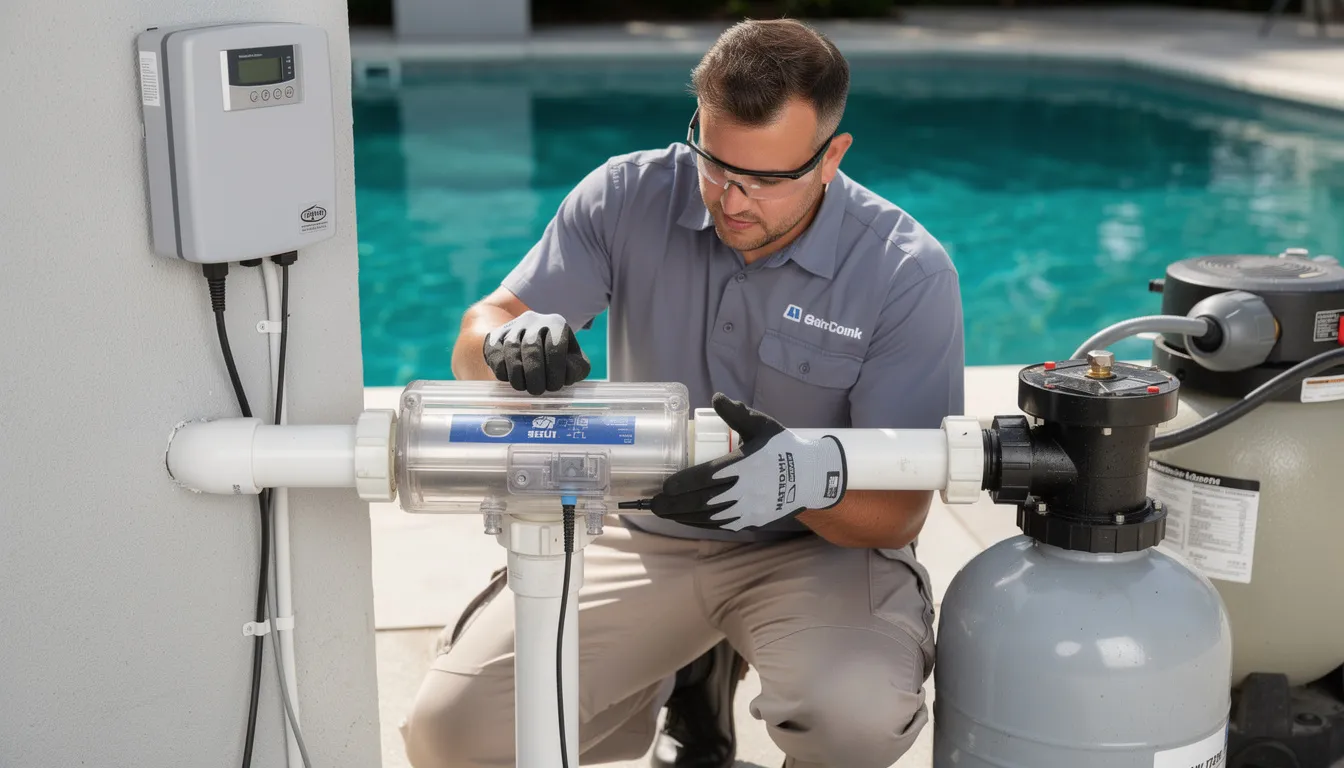
Planning and marking:
Identify a straight section of return plumbing with enough length to accommodate the salt cell (typically 12–18 inches plus unions)
Measure twice and mark your cut lines according to the product’s specifications
Confirm the flow direction arrow on the cell will point toward the pool return
Cutting and dry-fitting:
Cut the pipe cleanly using a PVC cutter or fine-tooth saw
Remove burrs from both the pipe ends and inside the fittings
Dry-fit the unions, cell, and any adapters to confirm proper alignment and orientation before gluing
Gluing and assembly:
Apply PVC primer to all mating surfaces, then cement
Assemble fittings and cell in the correct sequence, holding each joint for the recommended time
Allow appropriate cure time (typically 2–4 hours minimum, longer in cold weather) before pressurizing
Mounting the control unit:
Choose a vertical surface near the equipment pad that’s protected from direct sprinkler spray and excessive moisture
Mount at a readable height with adequate clearance for ventilation as specified in the manual
Ensure the unit is accessible for future maintenance
Electrical connection:
The control unit must be wired so it operates only when the circulation pump is running
This is typically accomplished through the same timer, relay, or automation panel that controls your pool pump
Always have electrical work performed by a qualified person in accordance with local codes
Salt cell hookup:
Connect the cell’s power cable and any flow switch or sensor cables to the control unit
Secure wires neatly away from moving parts, sharp edges, and heat sources
Double-check all connections before powering on
Adding Salt and Starting the System
Salting your pool is typically a one-time major step, with only small top-ups needed afterward to replace salt lost through normal operation.
Calculating salt quantity:
Use your pool volume and the manufacturer’s salinity charts to calculate pounds of salt needed
Target the middle of the recommended range (often around 3,200 ppm) to give yourself buffer room
If you’ve used certain chlorine products previously, your pool may already contain some salt—test first and adjust your calculation
Distributing salt:
Broadcast salt bags evenly across the shallow end of the pool
Avoid dumping all the salt in one spot, which can temporarily bleach plaster or vinyl surfaces
Brush the bottom to help crystals dissolve and run the pump continuously for at least 24 hours until all salt is fully dissolved
Verifying salinity:
Test with a reliable salt test strip or digital salinity meter before turning the chlorinator on
Compare your reading to the control panel’s display if your unit has a salinity sensor
Add salt only to reach target levels for your specific system
Initial settings:
Start the salt chlorinator at a moderate output setting, typically 40–60%
Run your pool pump long enough each day (often 8–12 hours in summer) to build and maintain a stable chlorine residual
Higher water temperatures and heavier bather loads require longer run times or higher output
First-week monitoring:
Test free chlorine levels daily for the first week using reliable test strips or a liquid test kit
Adjust output percentage or pump runtime until levels settle consistently between 1–3 ppm
Don’t panic if levels fluctuate initially—it takes time for the system to reach equilibrium
Routine Operation and Maintenance of a Residential Salt Pool
Salt pools require less day-to-day effort than traditional chlorine pools, but they’re definitely not maintenance-free. Consistent, light care prevents the kind of problems that lead to cloudy water, algae outbreaks, or premature equipment failure.
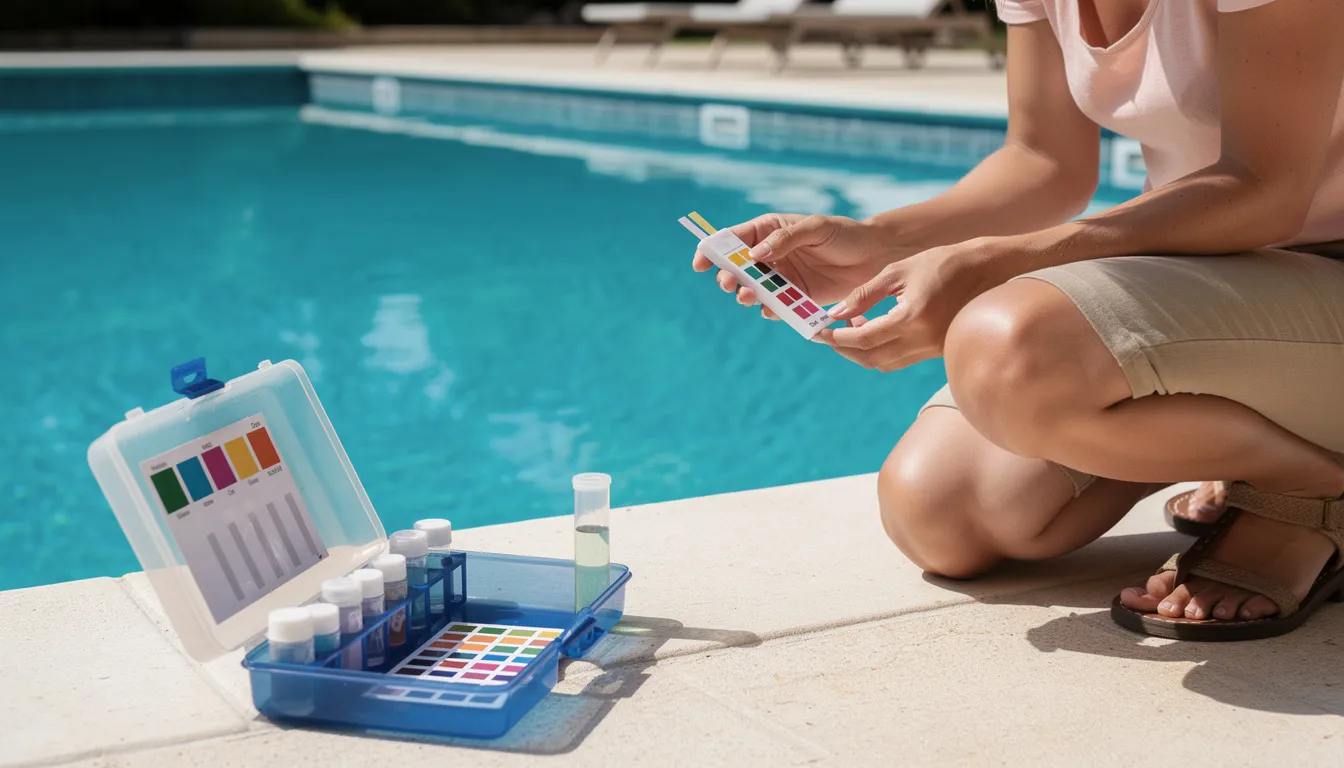
Weekly testing:
Check free chlorine, pH, total alkalinity, and cyanuric acid at least once per week during swim season
Make small, gradual adjustments rather than large swings, which can create new problems
Keep a log to track trends and anticipate seasonal changes
Ideal chemistry ranges for salt pools:
Free chlorine: 2–4 ppm (some sources recommend 1–3 ppm for lightly used pools)
pH: 7.2–7.8, with 7.4–7.6 as the sweet spot
Total alkalinity: 80–120 ppm
Cyanuric acid: 60–80 ppm for outdoor pools to protect chlorine from UV degradation
Salt level: Follow your specific chlorinator’s recommendation, typically 2,700–3,500 ppm
Calcium hardness: 200–400 ppm to prevent scaling and surface damage
Cell inspection and cleaning:
Visually inspect the cell every 1–2 months for white, chalky calcium buildup on the plates
If scale is present, remove the cell and soak in a manufacturer-approved dilute acid solution (typically a 4:1 water-to-muriatic acid mix) for 5–15 minutes
Rinse thoroughly before reinstalling
Avoid over-cleaning, which strips the precious metal coating and shortens cell life
Modern self-cleaning cells with polarity reversal reduce but don’t eliminate the need for manual cleaning
Control panel checks:
Glance at the control unit weekly for error codes, low-salt warnings, or low-flow indicators
Consult your manual promptly if any warnings appear—ignoring them can lead to bigger problems
Keep the manual accessible near your pool equipment
Seasonal adjustments:
Cooler water (below about 60°F/15°C) significantly slows or stops chlorine production
During shoulder seasons or winterization, you may need to reduce output, shut down the system, and manually add chlorine as needed
In hot summer months, increase pump runtime and potentially output percentage to keep up with higher chlorine demand
Protection against corrosion:
Rinse metal ladders, rails, and nearby stone or decking periodically, especially after heavy splash-out
Keep salt levels within your manufacturer’s specified range—higher isn’t better
Consider installing sacrificial zinc anodes on pools with significant metal components
Inspect metal fixtures annually for early signs of corrosion
Troubleshooting Common Salt Pool Issues
This quick reference covers frequent homeowner complaints, but it’s not a replacement for professional diagnostics when problems persist.
Low or zero chlorine despite system running:
Verify salt level with an independent test—the panel reading may be inaccurate
Check that pump runtime is sufficient for current conditions (at least 8 hours daily in summer)
Inspect cell plates for heavy scale buildup that blocks current flow
Look for control unit faults or error codes
Confirm the flow switch is functioning and water is actually passing through the cell
Cloudy or green water:
Significant algae growth requires a traditional chlorine shock with liquid sodium hypochlorite or granular calcium hypochlorite
Brush walls and floor thoroughly and run the filtration system continuously until water clears
Resume normal salt system operation once clarity returns and chlorine levels are stable
Check and clean your filter, as clogged media reduces circulation
“Check salt” or “Low salt” warnings:
Test salinity with an independent method (strip or digital meter) and compare to the panel reading
Some sensors drift over time or become coated with deposits
If salt is truly low, add pool grade salt gradually and retest after 24 hours of circulation
Don’t rely solely on panel displays for salt readings
Persistent high pH drift:
Rising pH is common in salt pools due to hydroxide production during electrolysis
Be prepared to add small doses of muriatic acid regularly (weekly in some pools)
Keeping total alkalinity on the lower end of the recommended range (80–90 ppm) can slow pH rise
Ensure good circulation and aeration throughout the pool
Premature cell wear:
Running at maximum output constantly accelerates electrode degradation
Very high calcium hardness (above 400 ppm) promotes rapid scaling
Aggressive or frequent acid cleaning strips protective coatings
Address these factors to extend cell lifespan toward the 7-year end of the typical range
Safety, Health, and Long-Term Considerations
When maintained properly, residential salt water pools are safe and comfortable for families, including children and most pets. The water chemistry principles are identical to any chlorinated pool—free chlorine remains the active sanitizer and must stay in the recommended range for effective disinfection.
Health and comfort aspects:
The lower, more consistent chlorine levels and lack of stabilizer additives from tablets typically result in milder water that causes less skin dryness and eye irritation
However, saltwater chlorination is not chlorine free—the pool still requires adequate free chlorine levels to prevent algae growth and kill bacteria effectively
Swimmers with severe chlorine sensitivities should understand that the active sanitizer is the same; only the delivery method differs
Chemical handling safety:
Day-to-day, you’ll handle fewer chemicals since you’re not regularly adding chemical chlorine
However, you’ll still need to store and use balancing chemicals safely, including muriatic acid for pH control and baking soda or soda ash for alkalinity adjustments
Keep all pool chemicals locked away from children and pets, and always follow manufacturer’s instructions
Never mix different pool chemicals, especially acids and chlorine products
Equipment longevity:
Salt can accelerate corrosion on heaters, ladders, rails, diving boards, and automatic pool covers if materials aren’t salt-compatible
Specify 316 stainless steel (not 304) for any metal components in or around salt pools
Confirm heater and pump manufacturers warranty coverage for saltwater use before installation
Inspect metal fixtures and equipment annually for early signs of deterioration
Energy consumption:
The salt system itself draws modest power (typically 50–100 watts while operating)
However, the need for consistent pump runtime to generate enough chlorine can increase overall electricity use
Variable-speed pumps can offset this by running longer at lower speeds, often resulting in net energy savings compared to single-speed pumps on shorter cycles
Smart controllers that adjust output based on demand can further optimize efficiency
When to call a professional:
Persistent error codes that don’t resolve after basic troubleshooting
Repeated cell failures before expected lifespan
Significant leaks at cell unions or plumbing connections
Any uncertainty about electrical safety, wiring, or code compliance
Water chemistry problems that don’t respond to normal corrections
Final thoughts:
With the right salt pool system sized for your pool, proper installation by qualified professionals where needed, and simple weekly water chemistry care, salt water chlorination can deliver years of clear, comfortable water for your residential backyard pool. The initial investment pays dividends in reduced chemical handling, a more enjoyable swimming experience for your family, and the satisfaction of pool water that feels genuinely pleasant rather than harsh.
Start by calculating your pool volume, researching systems rated appropriately for your climate and usage, and consulting with local pool professionals who can assess your specific situation. Your future self—stepping into silky, low-odor water on a hot summer day—will thank you.